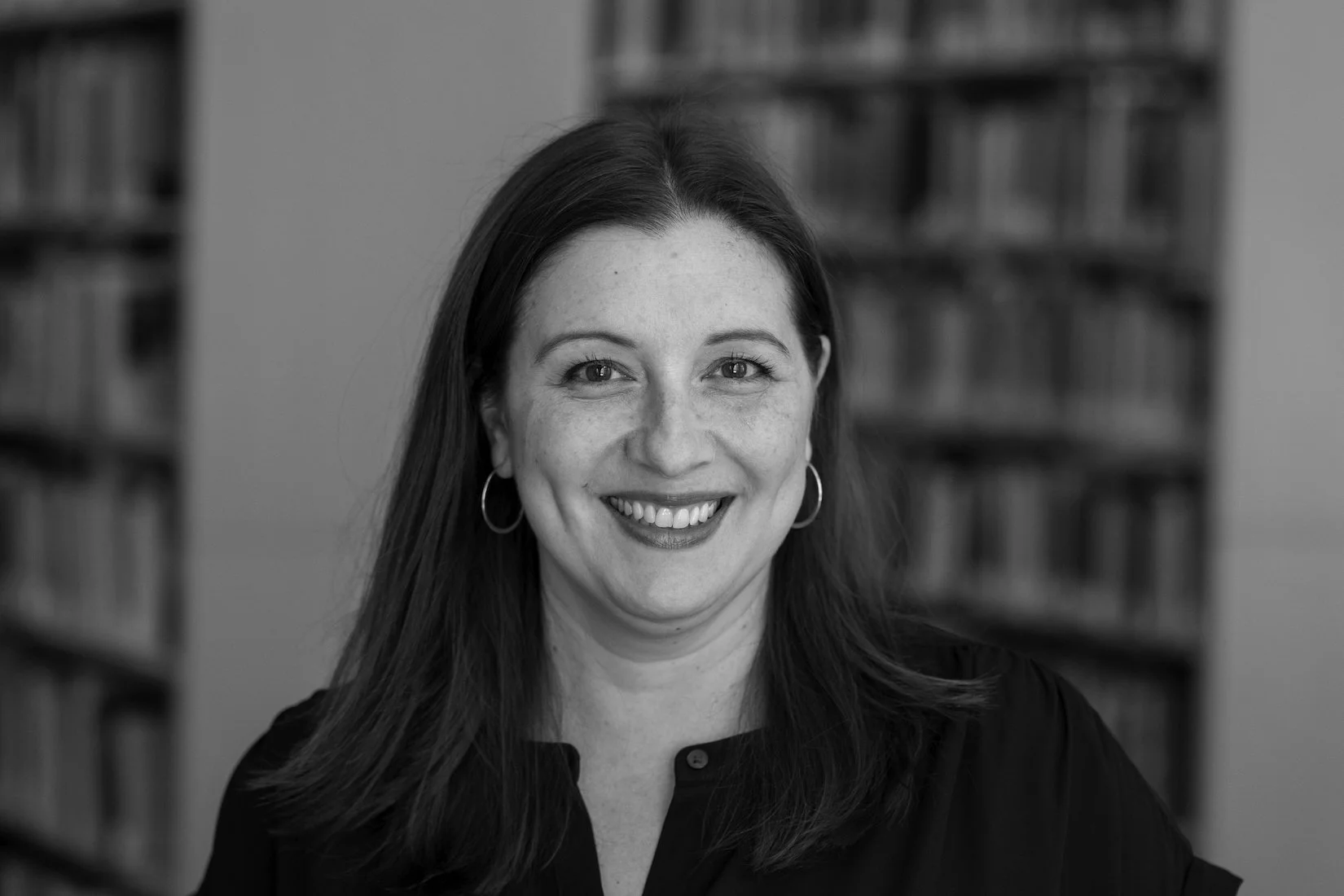
Region 4:
Roxanne Shirazi
The City University of New York
My name is Roxanne Shirazi and I’m running for the position of region 4 member of the AAUP governing Council.
I’m a librarian and faculty member at the CUNY Graduate Center, where I’ve spent the last ten years organizing faculty, graduate students, and academic professionals to build our collective power across titles through the Professional Staff Congress (PSC/CUNY).
I am running for AAUP Council because I have experience organizing with a collective bargaining unit and serving as a shared governance leader, and I believe that academic workers need to use all the tools available to us as we fight the onslaught of attacks on higher education. As a chapter delegate and member of Committee T, I have seen the AAUP transform into a fighting union, and I want to further that work while preserving the organization’s independent role in articulating standards for academic freedom, shared governance, and academic practice. I believe we can do both, and that both are necessary to strengthen the position of the AAUP nationally and to retain its reputation as an expert and authoritative voice for academic labor on issues specific to higher education.
Alongside wall-to-wall organizing in higher education, the AAUP must continue to assert faculty authority over curriculum and instruction, and we must fight legislative attempts to reframe our collective voice as merely “advisory.” Why? The core activities of the university are being outsourced to unaccountable corporations in the name of efficiency and modernization at an alarming rate, whether it’s through educational technology, AI systems, consulting firms, or for-profit publishers. We cannot let third-party vendors or corporatized board members determine the future of teaching, learning, and research in higher education. Every new technology system not only adds to the faculty and staff workload, it represents an enclosure around an educational process that should be determined by the faculty who have expertise and primary authority over curriculum and instruction. And that enclosure limits our ability—the faculty’s ability—to direct how those educational processes work and what can be achieved. We need to demand broad representation in the decision-making bodies of the university that have real implications for the way we teach and the way our students learn. We need to do this while organizing across titles to build the power necessary to protect the integrity of our educational institutions.
Faculty cannot do it alone. Many of us at CUNY, including librarians and academic professionals, have spent the last decade or more working to stop extractive vendors from hollowing out the university from the inside--a fight that has intensified even as we’ve had to fight on another front: stopping federal and state legislative interference from decimating the university from the outside. And while the scale has shifted dramatically, it’s all a piece of the same fight to defend higher education, bolster intellectual and academic freedom, and secure a free and democratic society. Faculty, working alongside librarians and academic professionals,must take back control of our teaching and learning environments—our workplaces—and that begins by organizing together.
Biographical Information
I am an associate professor and librarian at the CUNY Graduate Center. As a librarian, I support graduate students as they prepare their dissertation for deposit, helping them navigate copyright, citation styles, and digital accessibility. I also serve as project director for the CUNY Digital History Archive and oversee the college’s institutional archives. My research focuses on digital scholarship, archives, academic labor, and librarianship as a feminized profession and my writing has appeared in College & Research Libraries, Journal of Librarianship and Scholarly Communication, and Library Trends.
In my 13 years at the City University of New York, I have been an active member of the Professional Staff Congress, serving as a department steward and campus chapter leader (2017–22), and as a delegate to the AAUP (2024–present). During our last contract negotiations, I served on a bargaining subcommittee for educational technology, where we secured a labor-management committee to “discuss artificial intelligence, technology training, instructional design, and the impact of online teaching modalities on the terms and conditions of employment.” Since 2023, I’ve been a member of AAUP’s Committee on College and University Governance (Committee T), where I’ve contributed to statements and reports including, most recently, In Defense of an Independent and Representative Faculty Voice: The Case of Faculty Senates.
I became a senator in the CUNY University Faculty Senate in fall 2019, where I chair its standing Committee on Libraries and IT. I’ve contributed to academic policies related to educational technology (including the learning management system and AI), participated in procurement committees, and written numerous reports and white papers to get issues before the Board of Trustees. I also advocate for CUNY libraries and archives as they face crumbling infrastructure and staffing shortages.